You are here: Home / Linux / Debian / Page 2

Debian

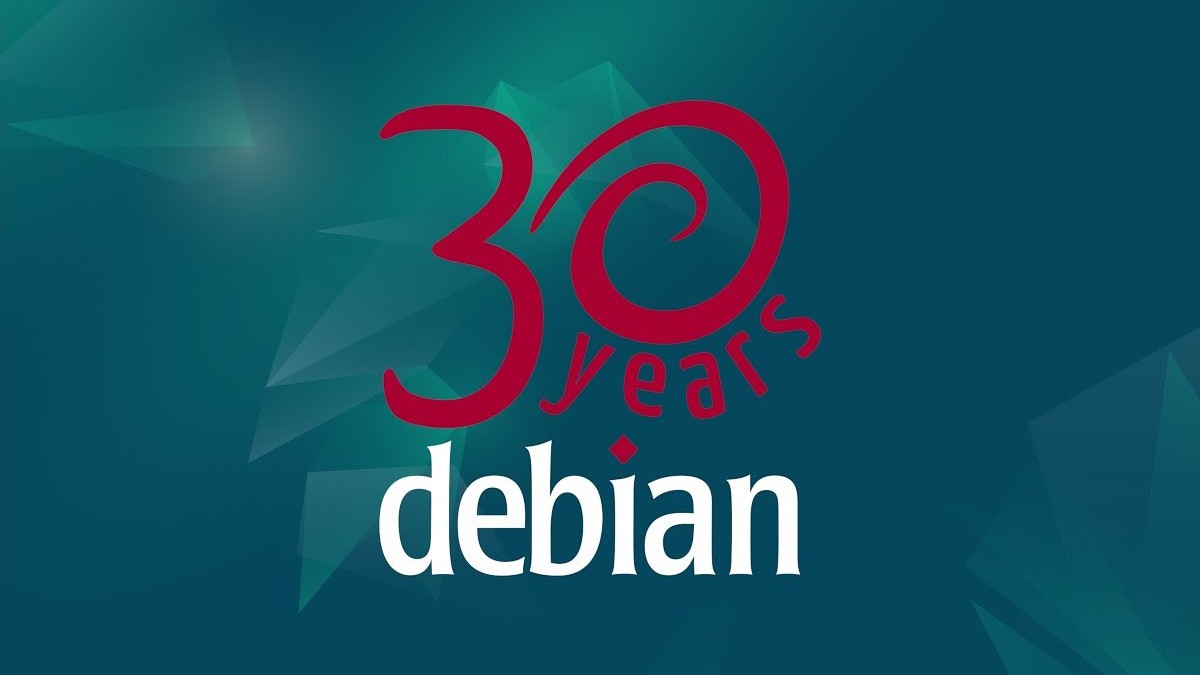
Debian logo, modified to celebrate its 30 year anniversary 1993-2023

[Skip preamble and jump to Debian-related articles]


History of Debian

Origins 1993–1995

Debian was founded in August 1993 by Ian Murdock, while studying at  Purdue University. At the time, Linux distributions were mostly maintained by small groups or individuals, often without formal structure. Murdock envisioned a community-driven distribution with open governance, quality standards, and a commitment to free software.

The name “Debian” combines “Deb” (from Debra, Murdock’s then-girlfriend) and his own name “Ian”. The “Deb” in Debian was Debra Lynn Roundy, later Debra Murdock, who was Ian’s girlfriend when he created Debian in 1993. The name “Debian” is simply Deb + Ian.

Versions

From the outset, Debian emphasised openness, and subsequently attracted contributors from around the planet.

idVersionCode NameRelease DateSupport EndsLTS EndsStatusDefinitive KernelDefinitive DesktopComments
11.1Buzz1996-06-17historicFirst Debian release
21.2Rex1996-12-12historic
31.3Bo1997-06-05historic
42.0Hamm1998-07-24historic2.0
52.1Slink1999-03-09historic2.0
62.2Potato2000-08-15historic2.2
73.0Woody2002-07-19historic2.2
83.1Sarge2005-06-06historic2.4GNOME 2 / KDE 3
94.0Etch2007-04-08historic2.6.18GNOME 2.14 / KDE 3.5Introduced udev and modular kernel
105.0Lenny2009-02-14historic2.6.26GNOME 2.22 / KDE 3.5
116.0Squeeze2011-02-062016-02-29LTS2.6.32GNOME 2.30 / KDE 4.4First LTS coverage model introduced retrospectively. introduced easier installation for cloud systems.
127.0Wheezy2013-05-042018-05-31LTS3.2GNOME 3.4 / KDE 4.8Improved ARM support, multiarch, and security updates.
138.0Jessie2015-04-252020-06-30LTS3.16GNOME 3.14 / KDE 4.11systemd adopted as default init system. This sparked debate but dramatically modernisedboot management.
149.0Stretch2017-06-172022-06-30LTS4.9GNOME 3.22 / KDE Plasma 5.8Improved UEFI support. Improved desktop environments, security hardening, and multimedia support.
1510.0Buster2019-07-062022-09-102024-06-30EOL4.19GNOME 3.30 / KDE Plasma 5.14AppArmor enabled by default. Better UEFI support, AppArmor security enhancements, and updated software stacks.
1611.0Bullseye2021-08-142024-06-302026-06-30LTS5.10GNOME 3.38 / KDE Plasma 5.20RISC-V introduced as official architecture. Enhanced ARM and RISC-V support, modern desktop environments, and secure defaults.
1712.0Bookworm2023-06-102026-06-102028-06-30LTS6.1GNOME 43 / KDE Plasma 5.27Modern toolchain and reproducible builds. Newer packages, improved cloud and container integration, and hardware support.
1813.0Trixie2025-08-09stable6.12GNOME 48 / KDE Plasma 6Current stable release. Features KDE Plasma 6, for those who wish to install it.
1914ForkytestingCurrent “testing” version and it will eventually become the next stable release, probably in 2028.

Key modern features

  • Extensive Architecture Support including  x86, ARM, PowerPC and RISC-V.
  • Long term support (LTS). Stable releases are supported for up to five years.
  • Cloud and container ready. Debian images are standard in Docker, Kubernetes, and cloud services.
  • Desktop and multimedia improvements. GNOME, KDE, Wayland, and PipeWire adoption for modern desktop experiences.

What makes  Debian significant

Debian’s contributions to the computing world are immense:

  • Community governance. Debian has become a model for large-scale open-source collaboration.
  • Package management. APT set a standard that influenced countless Linux distributions and is what certain lesser proprietary operating systems still struggle to emulate.
  • Commitment to free software. Debian’s DFSG has effectively shaped the broader open-source ecosystem.
  • Debian’s derivatives include Ubuntu, Kubuntu, KDE Neon, Linux Mint and Kali Linux.

In a nutshell, Debian has evolved from a student-led project in 1993 into one of the most stable, versatile, and respected operating systems in the open-source world. It is widely used on servers, desktops, and cloud platforms, including the server that hosts GarfNet.


Articles