
Infrared with a fairly decent camera
It’s Christmas Eve and my old Lumix DMC-GH2 has just been delivered back, Special Delivery, following its conversion to “full spectrum”, by Protech Photographic in Crowborough. Infrared photography is something I have wanted to do for many years. So this year, as a sort of “Christmas present to self”, I decided to have one of my old µ4/3 cameras converted.

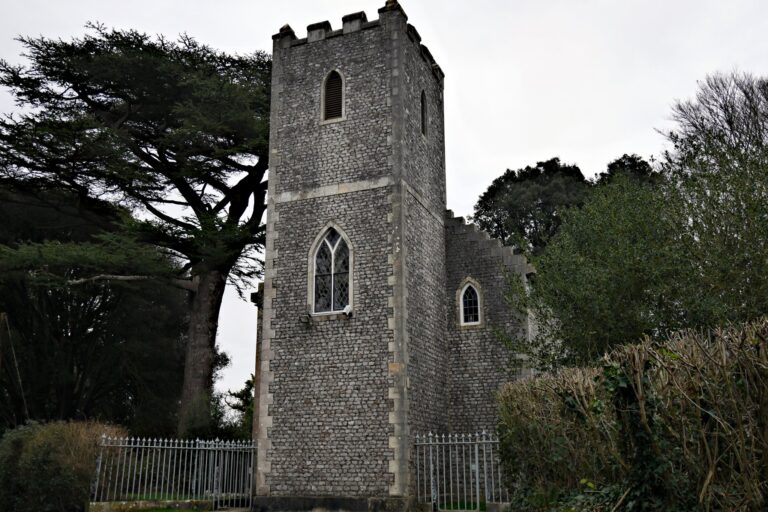
It’s also a chilly but bright sunny day. So I thought I’d pop outside and grab a few test infrared snaps. I don’t actually have a proper infrared filter yet. I’m still waiting for that to arrive from Shenzhen. So I made do with a cheap and nasty red filter on a 14-42mm Lumix kit lens, shoved a battery and a card in it, and off I went. Granted these aren’t exactly the most exciting infrared images ever captured. Nevertheless, I’m still rather pleased with the results.

They needed surprisingly little editing. A bit of cropping, followed by white balance and palette rotation. This is all very easily and quickly achieved in GIMP. In fact GIMP’s “Hue and Saturation” tool makes really light work of processing IR images.

More than meets the eye
Human eye only sees a tiny part of the total electromagnetic spectrum – less than an octave if you want to think of it in musical terms. That translates to light wavelengths between approximately 700nm (red) and 400nm (violet). With the default IR blocking filter removed, a normal digital mirrorless camera can be extended to see between about 1.2 µm (near infrared) and 300nm (ultra violet) – though there is significant roll-off of sensor response as wavelengths approach the far-ends of the scale.
This diagram lifted from Wikimedia explains it better than I can…

The guy who performed my “full spectrum” conversion has some excellent infrared examples on his site. Though of course the term “full spectrum” is a misnomer, insofar as the conversion still only extends the camera’s frequency range by an octave or so. I have flirted with infrared on security cameras quite a lot. I recently wrote that up in an earlier post. But I am a total noob when it comes to photographing infrared with a decent camera.
Consequently, I still have much to learn…
Gallery