My favourite old lens
End of year tends to make one reflect, and look back over the last year or so. As I did so, my “inner six-year-old’s” mind wandered onto the subject of my favourite camera lens. Problem is that I kinda like them all and I’ve had a lot of fun with them. My favourite lens is almost always the one I’m using at the time. Then I feel this sudden urge to try taking the shot with something else. I like to think this is because I have an enquiring mind, but the missus says its because I do indeed have the mental age of six. 🙂
Anyway, these are a few of the lenses to which I keep returning, and hope to again in the New Year. They’re are listed in no particular order of preference, but I’ll start with the biggest…
The big Russian
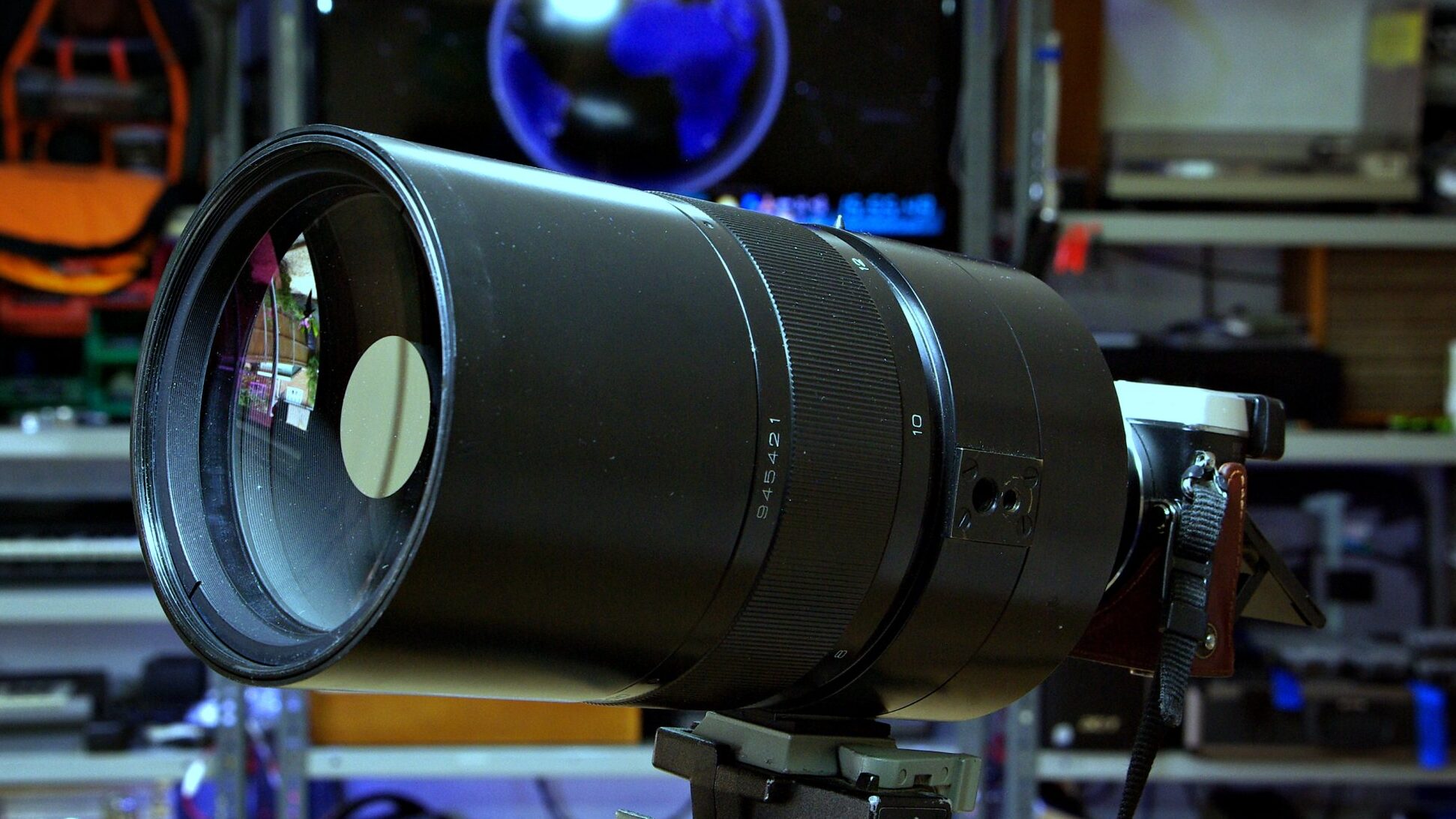
MTO 1000mm is so massive that one has to mount the lens on the tripod, then mount the camera on the lens. In this instance, the camera is a tiny Lumix DMC-GX7 Micro-Four-Thirds mirrorless. And yes, that’s a focal length of one metre, and 2000mm ‘135 equivalent‘ on µ4/3.
It is rumoured that these were standard issue for KGB covert surveillance operatives back in the 1970”s. Though weighing-in at over 2.4kg, these things were hardly what I would describe as ‘covert‘.
The little Russian
My Juipiter-8 50mm f/2.
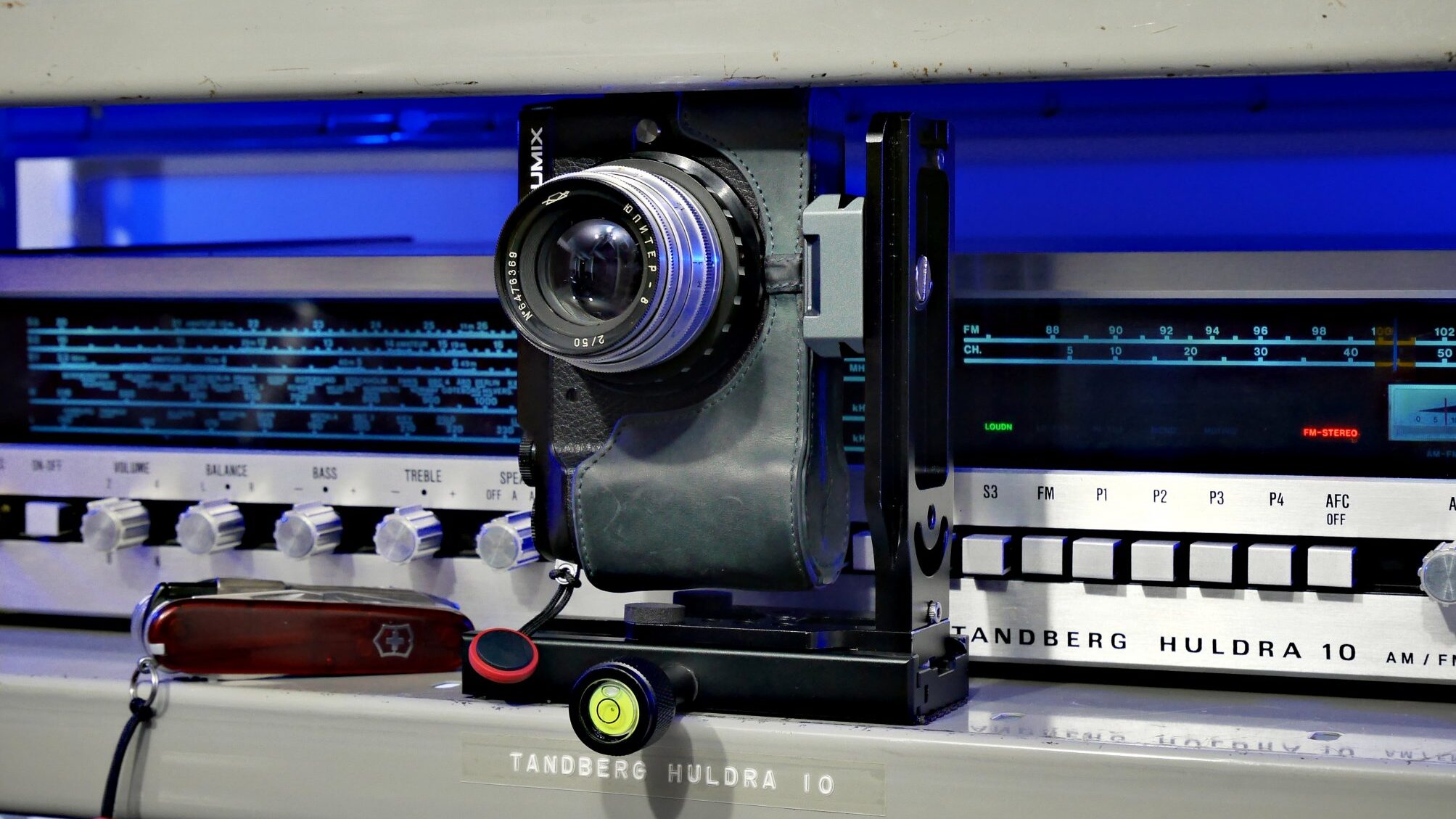
In this image it’s mounted on a µ4/3 camera (Lumix DMC-GX85) via a cheapie (less than a fiver) Chinese-made milled aluminium adaptor. I paid about tenner for the lens on eBay, from a bloke in Ukraine, IIRC. It came complete with the original certificate and a little plastic pot. Seems it was made in July 1967.
TBH, I have to admit that I bought it mostly because it looks very pretty – and it was dirt cheap. I was right at the start of my adventure into mounting Vintage MF glass on modern mirrorless cameras. I was mostly motivated by the fact I could buy a lot of reasonable quality glassware for my new µ4/3 camera, for bugger-all money! I didn’t realise it was a classic until after I bought it and actually started using it. By which time, I found myself hooked on vintage MF lenses – especially on µ4/3 cameras.
Due to the smaller sensor in µ4/3, a 50mm behaves much as a 100mm would on a 35mm – sometimes referred to as ‘135 equivalent’. So it is a bit long for general/studio use. Though it is useful for portraits. With focus peaking on the M4/3 cameras, it is very easy to use. Whilst I wouldn’t describe The Jupiter-8 as my ‘favourite‘ lens, I’d certainly be very sad to lose or damage it.
The well-built German
My old Leitz Wetzlar stereo microscope.
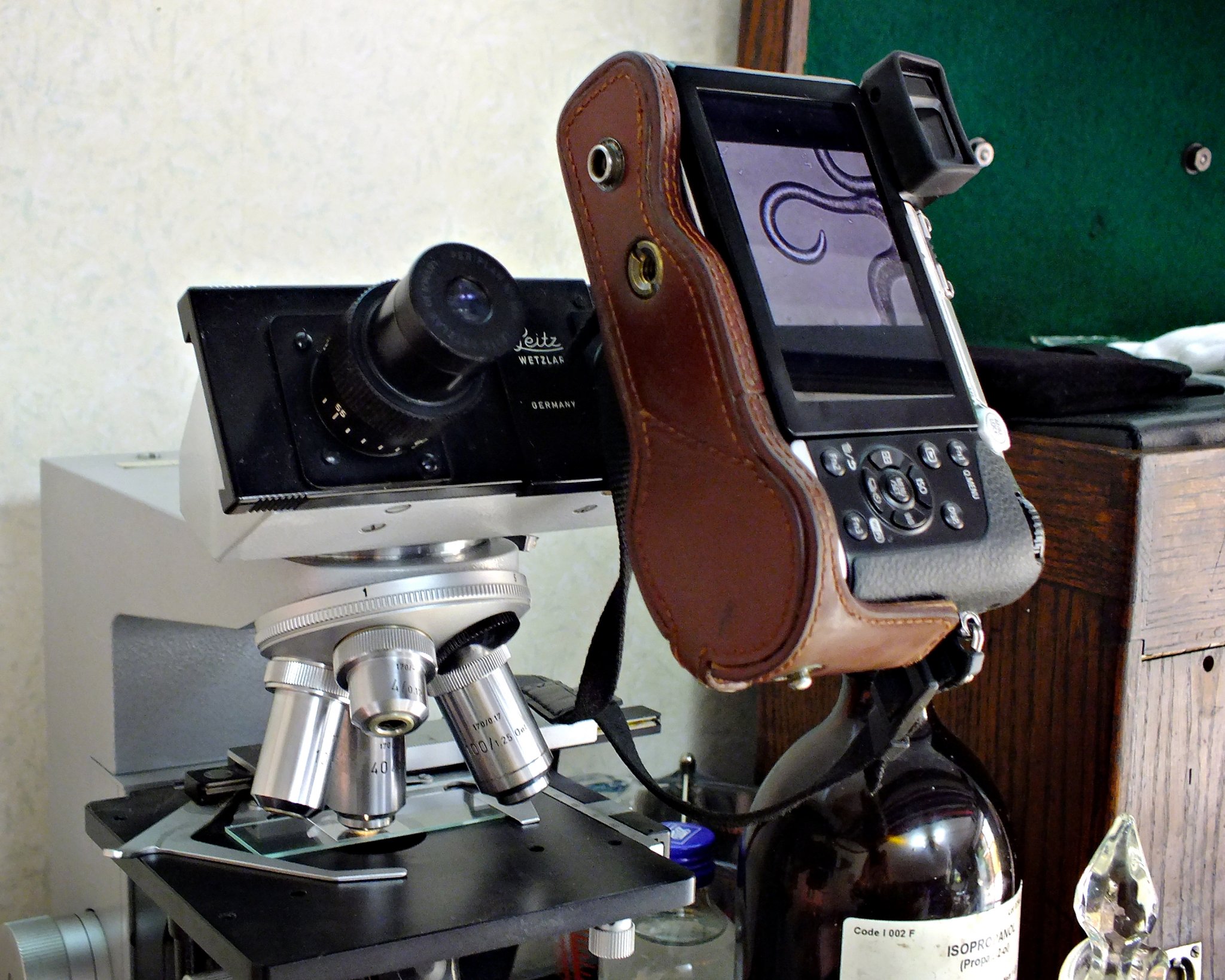
Not sure it this really counts as a lens, but I really, really like this thing. The camera is my first µ4/3 mirrorless, a diminutive but feature-packed Lumix DMC-GX7 and the microscope is an incredibly well-built and chunky Leitz Wetztlar stereo. In this instance, one eyepiece is removed, pro tem, and replaced with a simple Chinese-made 23.3mm -> C adaptor, screwed into a C -> m4/3 adaptor. It came as a set from China and cost me a little under a tenner.
I bought The Leitz Wetzlar some years back as part of a batch that a university lab was chucking out because they failed their PAT (portable appliance test). Set me back thirty quid, if I remember correctly. I’m guessing that some dingbat had flooded the workbench and filled the base up with water. It was simple matter of removing the base-plate and drying it out with a hot air blower. For safety’s sake, I then tested it with a megger-type insulation resistance tester, set to 1kV. This showed zero leakage to earth. I also replaced the infernally hot incandescent Philips 6v base lamp with a cold 5600K daylight LED. It works a treat, and so far, it hasn’t given me a belt. 🙂

The real old timer
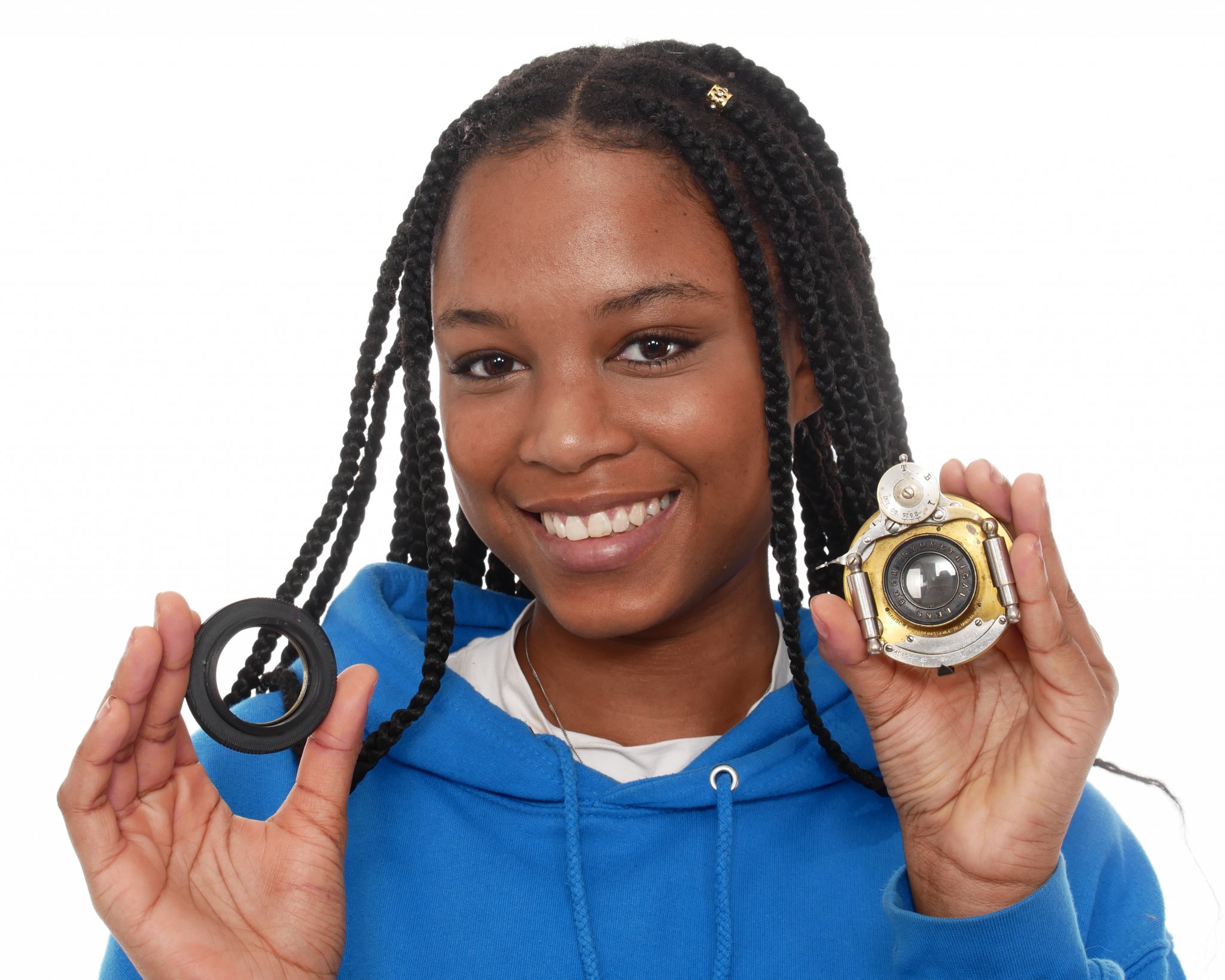
I guestimate this thing is around 120 to 130 years old – I mean the old folding-camera lens, not the attractive young woman 🙂 It’s a British made Beck lens mounted in a Bausch & Lomb shutter and iris assembly, which, according to what’s engraved on the housing was patented 1891-01-06.
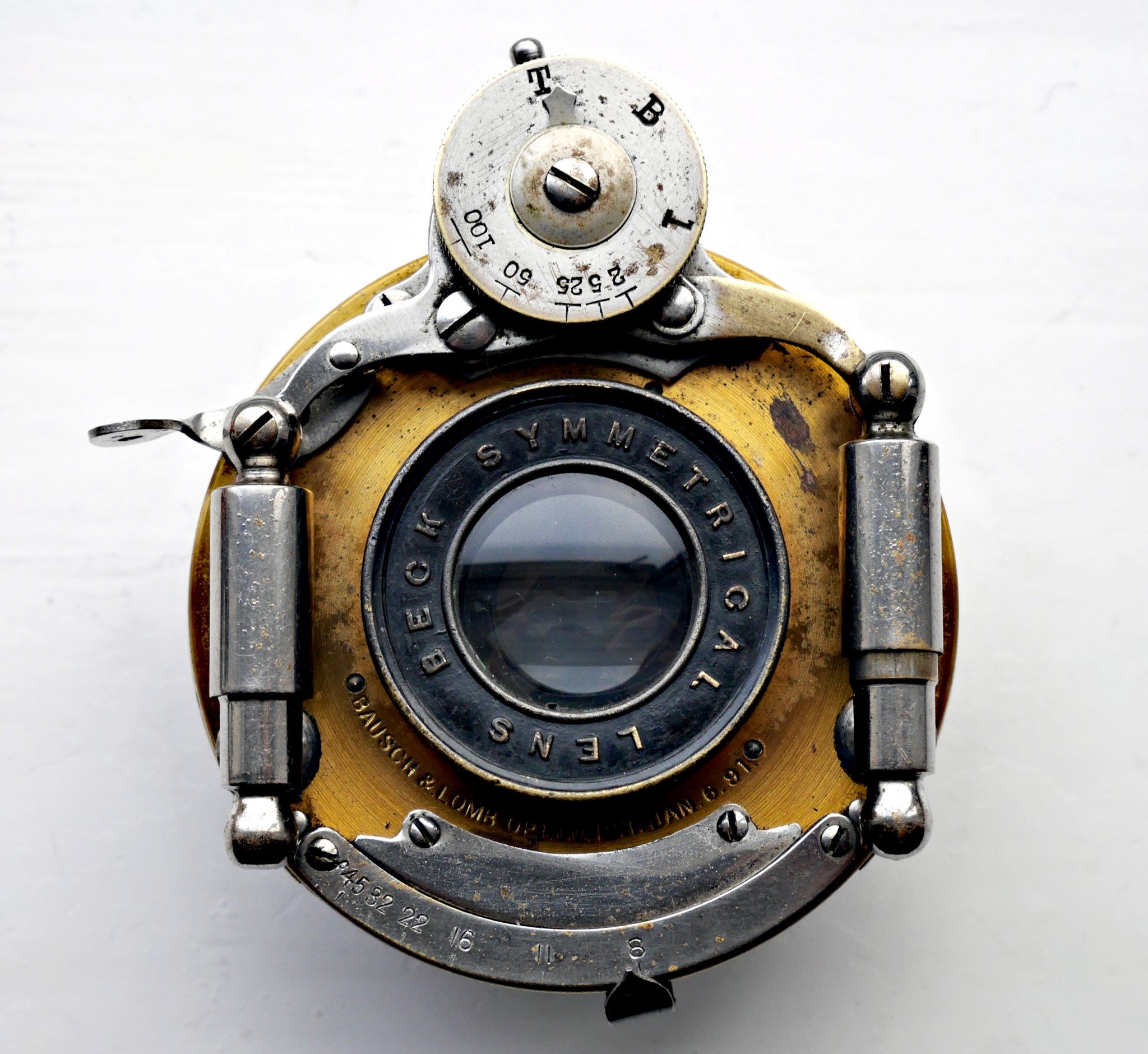

I owe the ability to use this old lens on a modern mirrorless camera to the man my wife describes as my “Lens Friend from Tunbridge Wells” and his fantastic plastic printing machine. He made the adaptor that allowed me to fit it on the end of a standard M42 macro bellows.

I’m guessing it wold have been sold as a 4 inch lens ≅ 102mm. Which is 204mm ‘135 equivalent’ on a µ4/3. Which is a bit long for studio use. But it is a rather good fun telephoto lens.
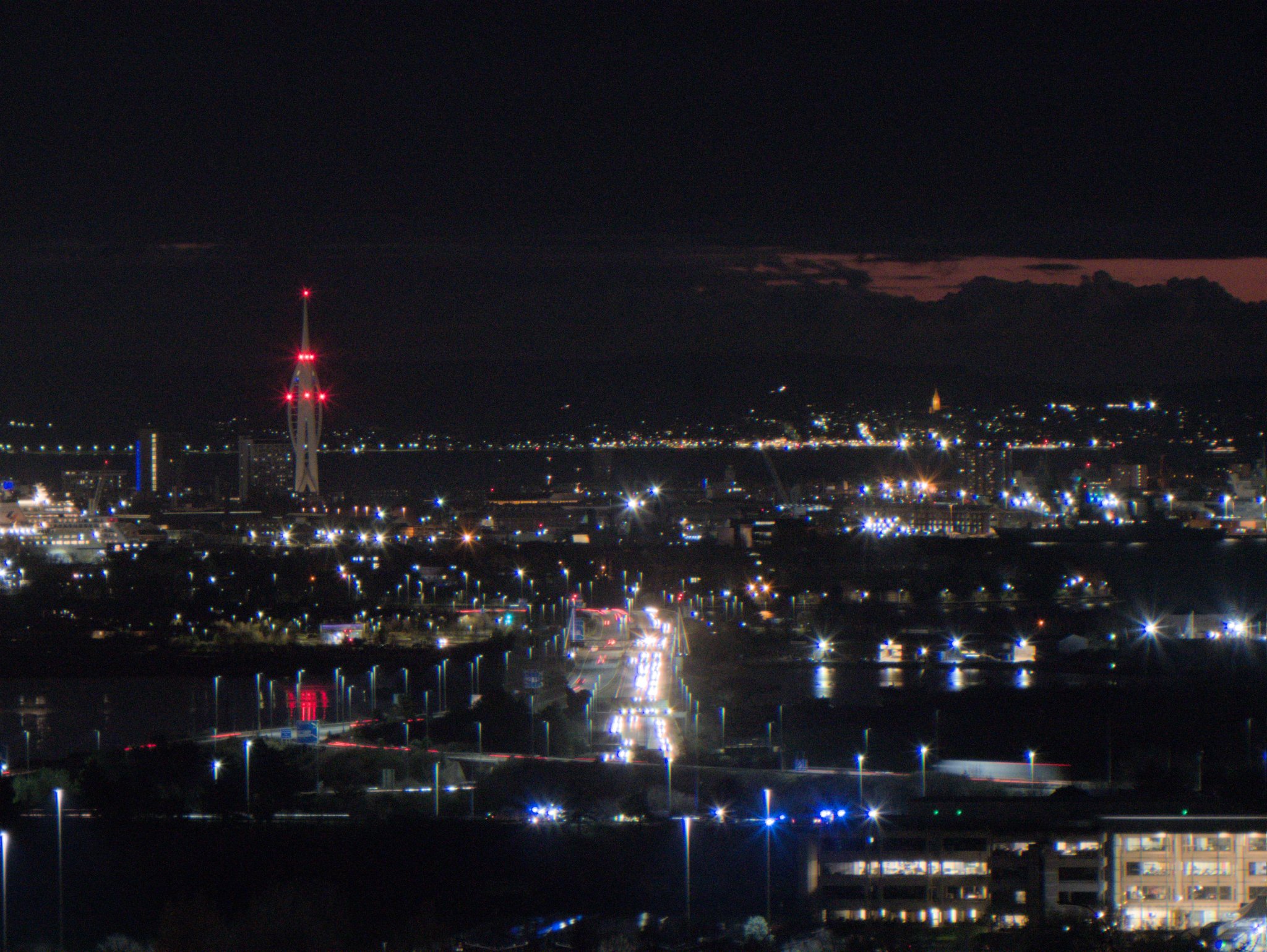
Of course, it was made at a time when colour film was in the realms of science fiction. So there is quite a lot of chromatic aberration, which is particularly noticeable on this night time image. But this gives the lens quite a soft and dreamy feel.
- More: https://garfnet.org.uk/cms/2023/12/29/making-a-120-year-old-bausch-lomb-beck-lens-work-on-a-modern-mirrorless-camera/ and https://garfnet.org.uk/cms/2024/01/05/120-year-old-bausch-lomb-beck-lens-in-action-on-portsdown-hill/
The lens that appeals to ‘inner six year old’
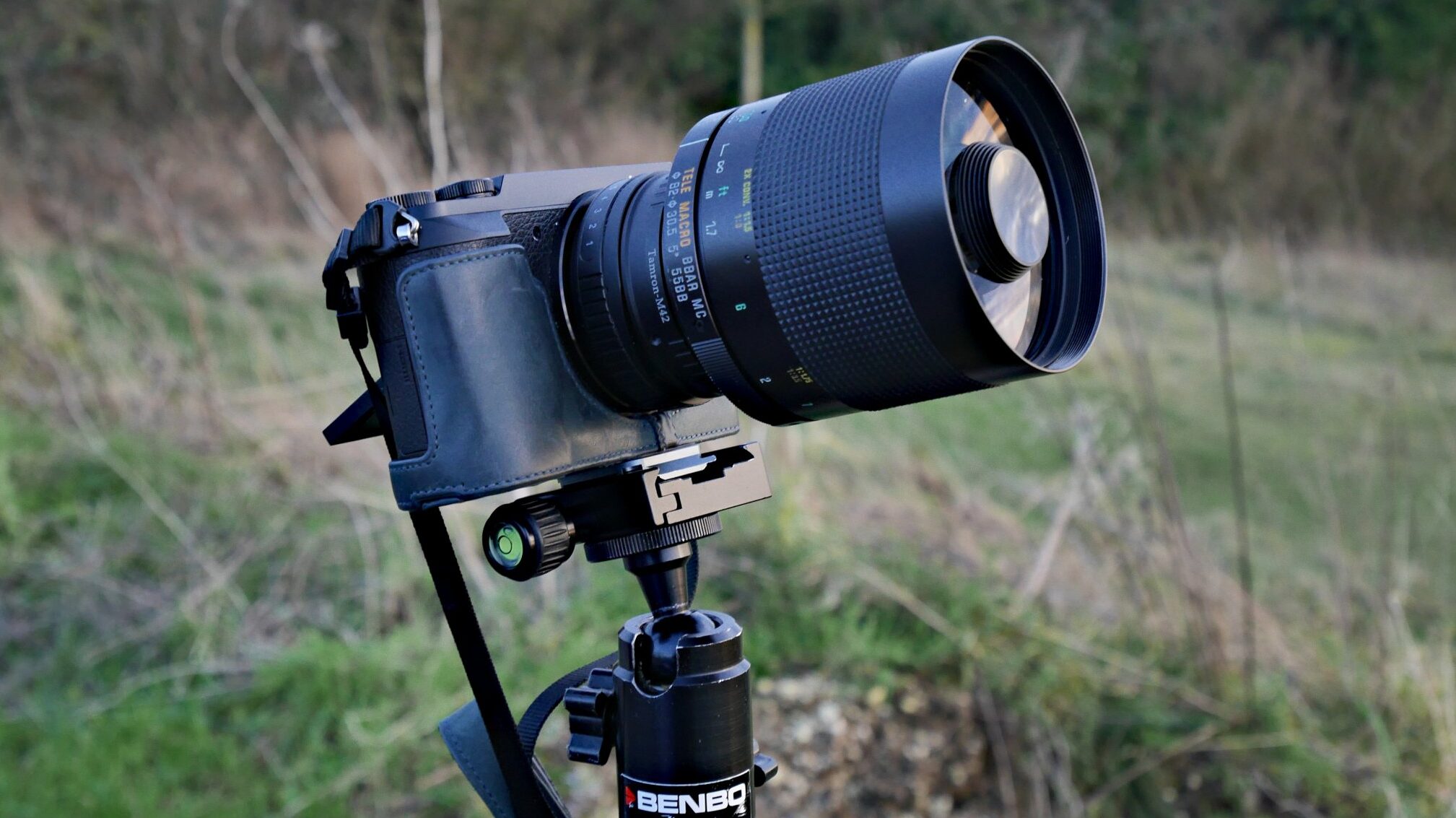
I always had a penchant for Tamron lenses, especially those from the 1970’s and 1980s. These are beautifully made and often massively over engineered – all metal and glass. I also love catadioptrics. The counter-intuitive notion of having bloody great hole in the middle replaced by a backward-facing mirror, c/w the fact that they look like something off a 60’s spy movie really appeals to my inner child.
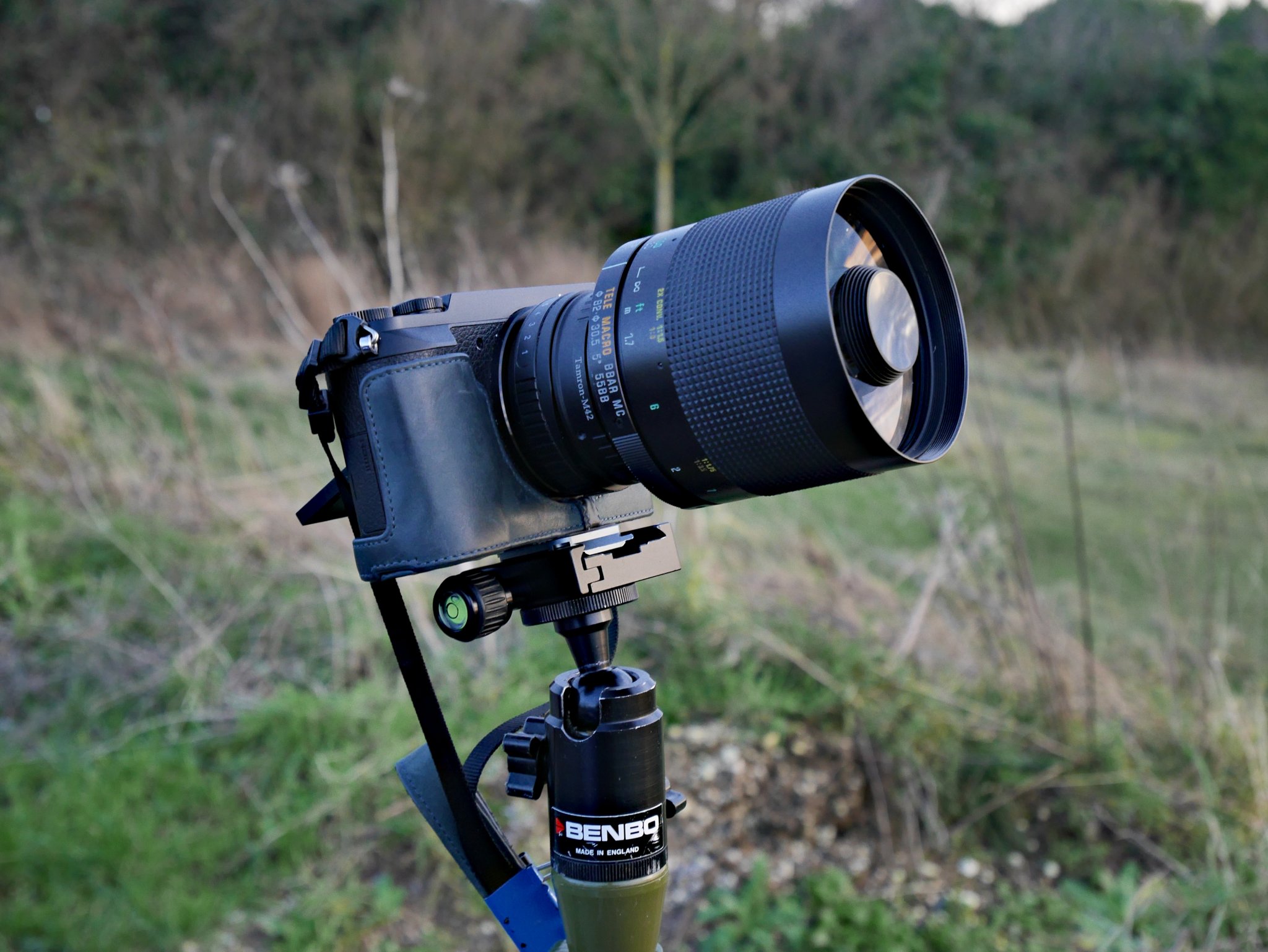
The biggest advantage of catadioptric lens is that for a given focal length, it is significantly smaller and lighter than a conventional lens. This particular lens weighs just 646 grams. For a 500mm, that is incredibly lightweight. Fitted to one of my little Lumix µ4/3’s, that’s a combined mass of just 1.15 kg. And it seems to suit µ4/3 particularly well because the field of view is just what I want for a long distance lens.
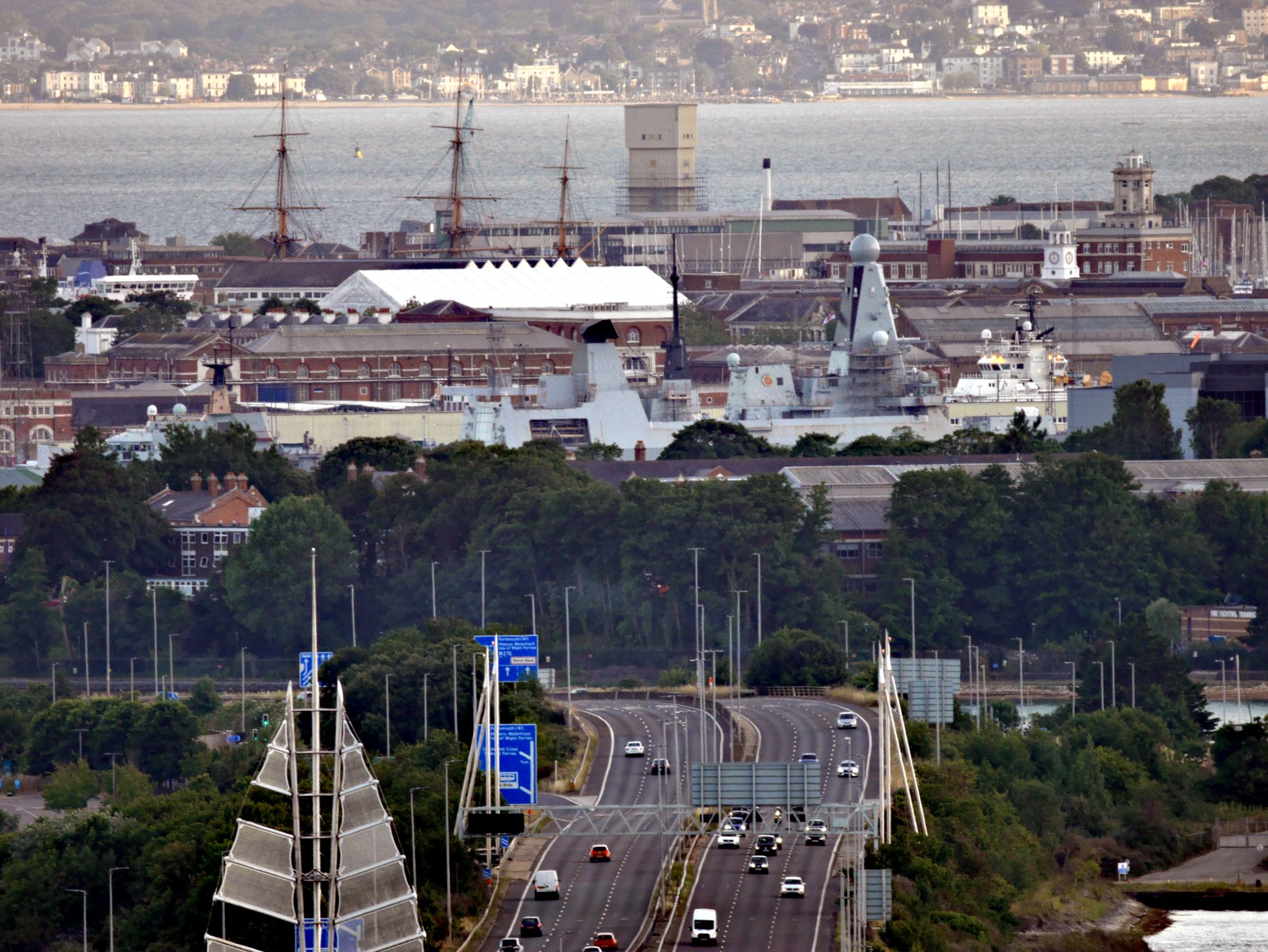
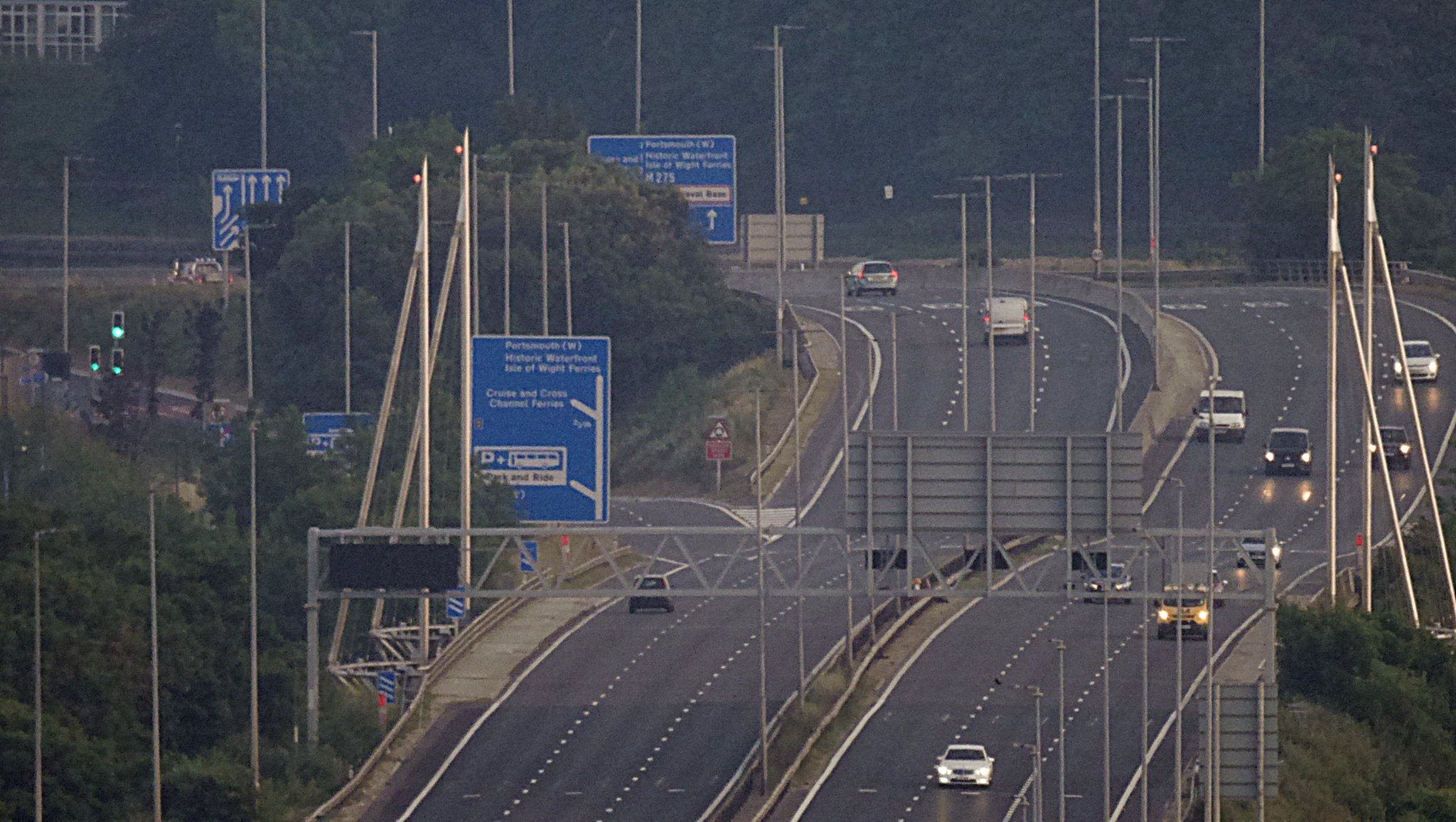
M275 in the foreground 3km, Portsmouth Historic Dockyard with the three masts of the HMS Victory, in the middleground, about 8km away, and Ryde on the Isle of Wight at around 13km.
Not for everyone
I know catadioptrics have issues and are certainly not everybody’s cup of tea. One of the problems with most cats is that the aperture is fixed. In the case of this lens it’s f/8. The hyperfocal distance of a 500mm at F/8 on a µ4/3 sensor (17.3mm x 13mm) is around 2.2 km – about a mile and a third in “old money”. But it’s slightly more complex in this instance because Adaptall type lenses often focus slightly “beyond infinity“. I’m guessing this was to allow for tolerances in adaptor design, to make sure that the lenses would actually focus to infinity regardless of the camera upon which they were mounted.
However, this overshoot makes focussing be a tad tricky. You have to twist the lens to infinity position, then turn it back very slightly, Fortunately my µ4/3 cameras have quite good focus highlighting. This seems to work moderately well with this lens, even if the squiggly lines are a little hard to see, at times. Thus making it possible to obtain a reasonably sharp focus even on quite a hazy day.
The cheap, cheerful Chinese
Then there’s my 7.5mm f/2.8 Risespray,
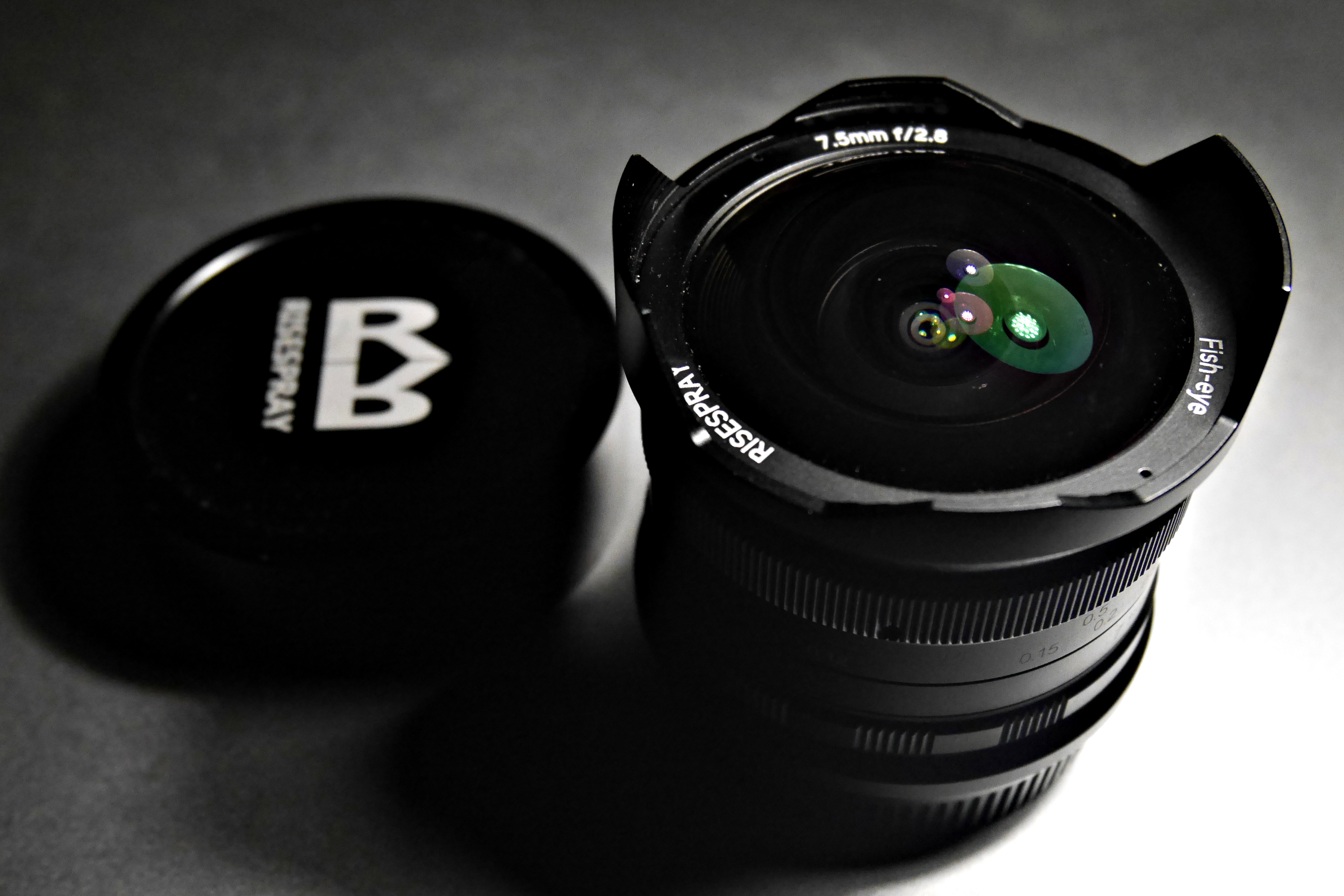
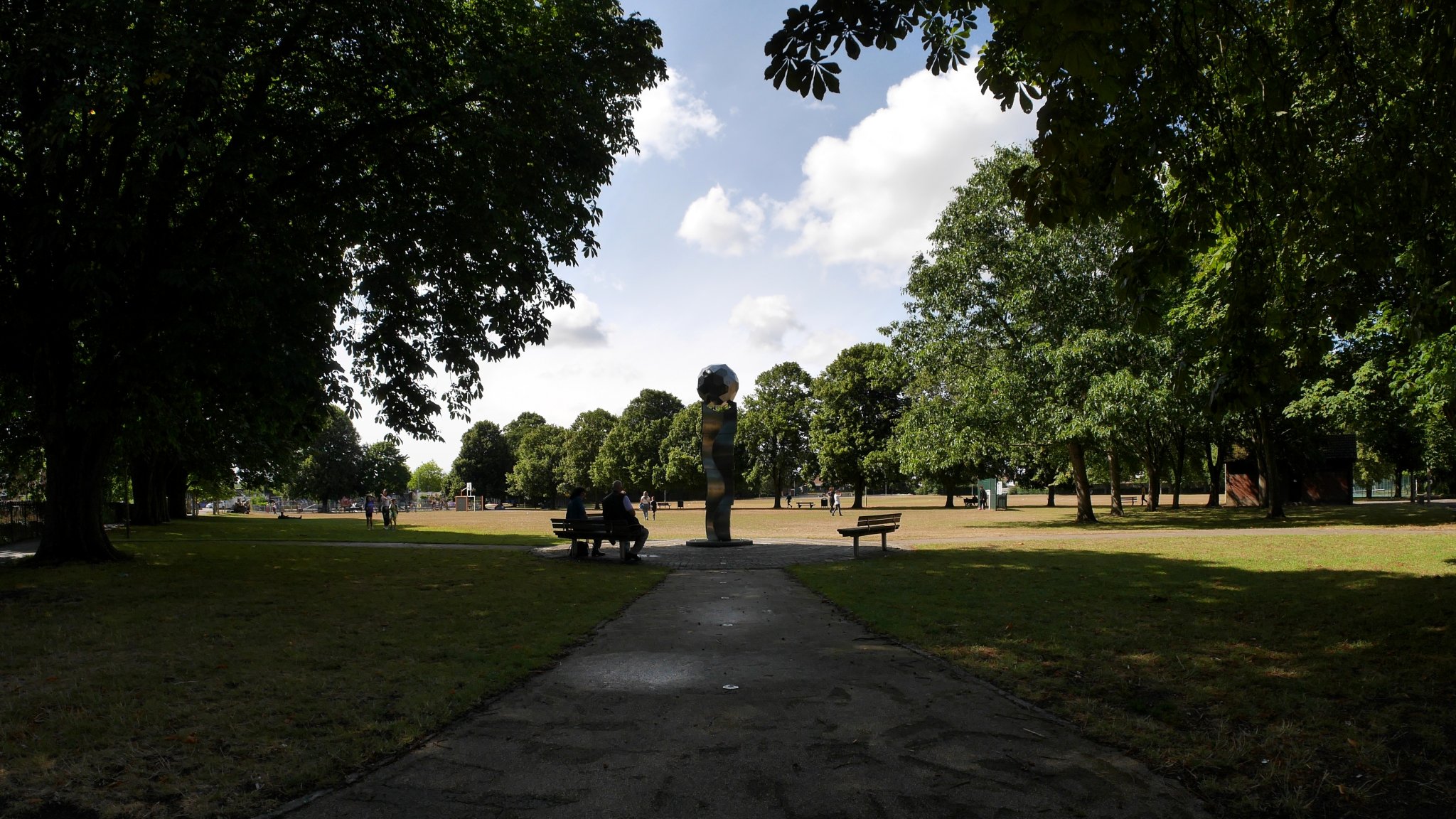
This thing is beautifully made and surprisingly good quality for the price. It’s pretty useless in the studio but very handy for wandering round the town.
The trusty Tamron 90mm macro
For top notch macro work, I’ve yet to find anything – certainly not anything affordable, to beat this old thing. With the matching teleconverter, it does genuine 1:1. On a Micro-Tour-Thirds camera, it means the entire width of an unedited frame is just 17.2 millimetres.

With the teleconverter this thing effectively has a focal length of 180mm and supports apertures down to f/64, which according to my depth of field calculator, assuming a near point of 39cm gives one a DoF of about 500µm. Now half a millimetre still doesn’t sound much. But its enough to be able to see textures in fine paintwork such as this…

Conclusion
Seems all my favourites are old type manual focus lenses. I particularly like the solid, well-engineered feel of these lenses. Whilst most of these were designed for 35mm film cameras, I enjoy using them with µ4/3 mirrorless cameras. This is because I can take advantage of modern features such as focus peaking and in-body optical image stabilisation. They also encourage one to think through some of the photographic basics, e.g. focus, aperture, depth of field etc. I realise this is not everyone’s cup of tea -and that working out which is my favourite lens is probably the least important thing in the world right now. But I love the old things and it seemed quite a good, albeit somewhat quirky way to celebrate 2026.
Happy New Year! 🙂