
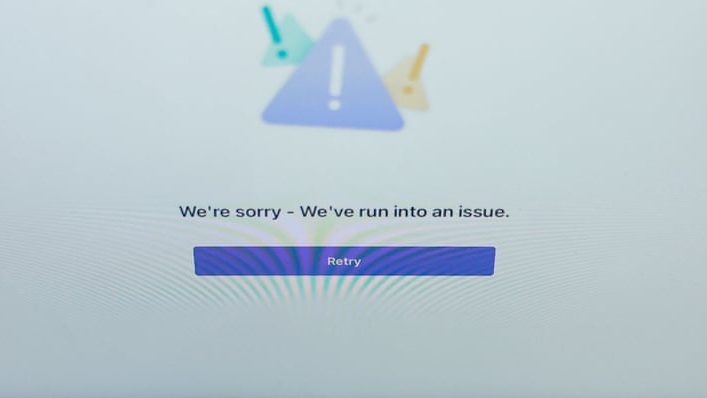
Yet another massive Microsoft outage
Seems Friday 13th has been particularly unlucky for users of Microsoft’s cloud services. Microsoft has treated its users to yet another outage, this time due to a major failure of its centralised cloud infrastructure. This has been massively amplified by the extraordinary degree to which some organisations have allowed one supplier’s cloud services to become an integral part of their operational plumbing. And Britain’s state-funded National Health Service has become one of its major victims.
The outage actually began last night 2026-11-12. It has now spread across multiple countries. Outlook, Teams, SharePoint, OneDrive and other Microsoft 365 services have been affected. In Britain, the Guardian is reporting disruption to hospitals, GP practices, pharmacies, police forces, schools and government services.
What actually went wrong?
The best explanation available at time of writing is a server configuration and infrastructure failure involving Microsoft’s automated server health checks. Here’s what seems to have happened..
- A large number of Microsoft’s servers became unexpectedly unavailable.
- Microsoft initially described the problem as elevated server load.
- The company subsequently indicated that servers were failing automated health checks and being removed from service.
- That left fewer servers to handle the workload.
- The remaining servers became overloaded, creating a cascading failure.
There’s an important technical caveat here too. Server health checks are supposed to protect the system by identifying unhealthy servers. If the checks themselves are incorrectly configured, they can effectively eject perfectly healthy servers from network. Thus exacerbating the problem.
It’s rather like a city-wide fire alarm system which, due to a fault, starts evacuating every building in a city, relocating people to other buildings. The remaining buildings then become overcrowded. This explanation is based on Microsoft’s updates and expert interpretation, not a completed technical post-mortem. Microsoft has not yet published a definitive root cause.
Is it worse than ClownStrike?
Erm, I mean CrowdStrike. Well it seems to be a similar order of magnitude, but with different causes. It’s a huge failure, but it’s a different type of huge failure. CrowdStrike rendered millions of individual Windows computers unusable. Whereas this time, Microsoft has made a substantial part of the world’s business communications infrastructure inaccessible. Both demonstrate how a relatively small technical failure can have massive consequences when deployed at scale, without adequate forethought.
CrowdStrike, July 2024 |
Microsoft, November 2026 |
|---|---|
Faulty security software update |
Apparent server configuration/health-check failure |
Windows machines crashed, often with BSODs |
Cloud services became unavailable |
Affected machines needed remediation |
Recovery depends on Microsoft’s infrastructure |
Windows endpoints across many organisations |
Microsoft 365 services across many countries |
The CrowdStrike incident affected approximately 8.5 million Windows devices. It caused enormous disruption to airlines, hospitals, banks and other organisations. This latest Microsoft cock-up is particularly nasty because it affects a shared service on which hundreds of millions of people depend. Outlook, SharePoint, Teams and other products may look like separate applications, but they share underlying infrastructure. One failure can therefore take out several apparently unrelated services simultaneously.
The NHS problem
There is a distinction worth making here. The current reporting doesn’t establish that Microsoft’s outage has destroyed or disabled the NHS’s underlying clinical systems wholesale. What’s happening is that NHS organisations have lost access to its various supporting services:
-
- Access to some IT facilities used by staff.
- Communications between pharmacies and GP practices.
- Email and internal communications.
- Teams meetings and collaboration.
- Some GP systems and associated workflows.
Some NHS staff have resorted to paper records. Prescriptions have been delayed. NHS England says local services are using existing contingency arrangements, and that critical clinical and operational systems have continued to function. That last point is important, although it doesn’t make the the rest of the disruption trivial. If a GP surgery can’t communicate with patients or access something it needs to perform its normal workflow, that’s a seriously dangerous service failure.
The broader concern: dependency
This is where I think the story becomes much more interesting. The UK government spends at least £1.9 billion annually on Microsoft software, according to the Guardian’s reporting. NHS England also has a major five-year Microsoft 365 agreement. Consider what’s been affected
-
-
- Businesses.
- Government departments.
- GP surgeries.
- Hospitals.
- Police forces.
- Schools, colleges and universities.
-
These organisations aren’t necessarily running the same applications. They’re not necessarily even running the same operating systems. But they share a dependency on one corporation’s infrastructure. That’s a concentration-of-risk problem. And it’s not solved by having a backup server in another data centre if that server relies on the same authentication, identity, DNS, management or communications infrastructure. A proper contingency plan needs to be independent of the failed service.
My take
I think this incident is a rather good demonstration of the difference between owning your computing infrastructure and renting access to somebody else’s computing infrastructure. In fact I would argue the approach we advocate often here on GarfNet is almost the opposite of the direction taken by much of the industry.
We have machines which can operate independently, standard file systems, replaceable components, SSH access, locally stored data, and backups which are physically disconnected when not in use. If Microsoft disappeared tomorrow, my Raspberry Pi doesn’t suddenly stop serving large language models, or monitoring my security cameras. My media server doesn’t stop serving media. My files don’t become inaccessible because an authentication service in another country has fallen over.
That’s not an argument against cloud services. They have legitimate advantages. Operating everything yourself has costs too. However critical public services should never be designed around the assumption that a single commercial supplier will always be available. Clearly they won’t.
The real object lesson
The technical failure isn’t just massively embarrassing for Microsoft. The architectural dependency exposed by it is a much bigger problem for everyone else. I’d be particularly interested to read Microsoft’s eventual post-mortem. The question I would like answered isn’t simply which configuration change caused the failure? It’s why the failure of automated health checks was able to cascade across so much of its global infrastructure?
And perhaps even more to the point. Why so much of Britain’s NHS has become so reliant on the products of a proprietary foreign software corporation, with such an appalling record of failure?
Links
- Microsoft outage live: disruption continues to affect millions as company says service is improving…
https://www.theguardian.com/technology/live/2026/nov/13/microsoft-outage-down-today-live-update-outlook-teams-365-when-fixed-latest-status-cause-news - Microsoft outage explained: what went wrong and is your data at risk?
https://www.euronews.com/2026/11/13/microsoft-outage-explained-what-went-wrong-and-is-your-data-at-risk - Microsoft scrambles to fix global outage affecting Teams and Outlook
https://www.theguardian.com/technology/2026/nov/13/microsoft-outage-outlook-teams-word-excel-reports